Threat modeling & Zero Trust by design
IRIUSCOMMED brings Threat Modeling and Zero Trust to every developer and SME, automating secure software design from day one.


Companies are moving their applications and data to the cloud at high speed. Many assume that using cloud services automatically makes them secure. In reality, external threats, misconfigurations and insecure software designs continue to expose organisations to cyber-attacks and data breaches.At the same time, Europe faces a growing shortage of cybersecurity professionals. SMEs and startups often cannot afford a dedicated Chief Information Security Officer or long, recurring consulting engagements. Developers are asked to “take care of security” on top of their existing workload, usually without specialised training. IRIUSCOMMED addresses this gap by turning advanced threat modeling and Zero Trust methodologies into a practical, guided solution that any development team can use. By combining the IriusRisk threat modeling platform, process automation and a collaborative community, the project helps organisations design secure architectures and keep them secure throughout the project lifecycle.
Cybersecurity threats – from malware and phishing to exploits and denial-of-service attacks – are constantly evolving. Organisations need to anticipate and mitigate these risks early, during system design, not only after an incident.
This requires specialised security skills that are in very short supply. Cybersecurity profiles are among the most in-demand, while training and experienced experts are limited and often unaffordable for smaller companies
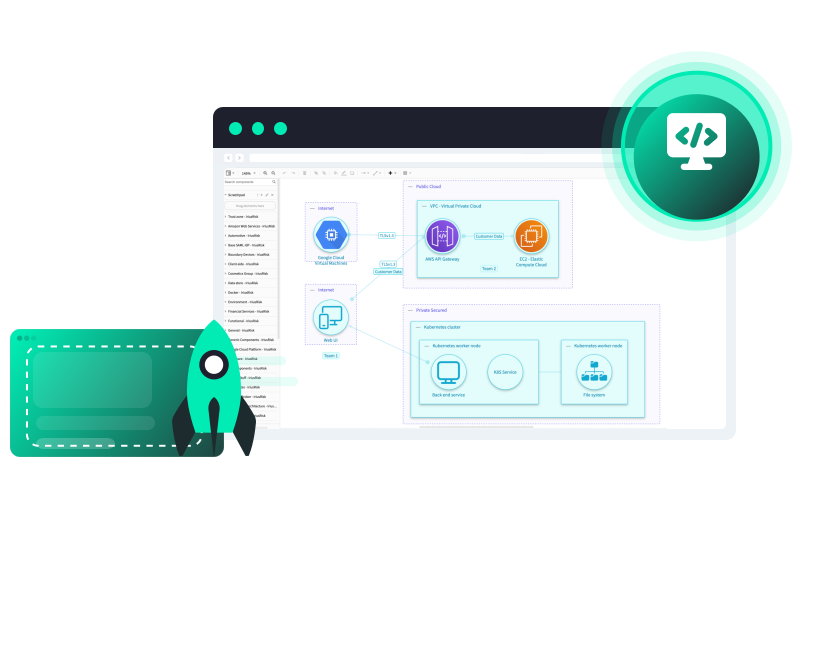
IRIUSCOMMED lays the foundations for making Threat Modeling and Zero Trust part of everyday software design, even for teams without deep cybersecurity expertise.The project builds on the IriusRisk threat modeling platform, which already helps organisations visualise architectures, identify potential threats and generate security requirements. IRIUSCOMMED goes further by:
1) Automating key steps in the threat modeling process (component identification, risk assessment, threat/counter-threat suggestions) to reduce human error and save time
2) Providing a library of reusable templates and patterns tailored to common architectures and application types, so untrained programmers can start quickly.
3) Integrating with developers’ existing tools and workflows (such as issue trackers), so security becomes a natural part of their daily work.
4) Creating a software community where developers, SMEs and security experts share templates, experiences and new risk patterns, continuously improving the solution.
In this way, IRIUSCOMMED offers a proactive and reactive cybersecurity approach: helping teams design secure architectures from the beginning and update their defences as threats and systems evolve.
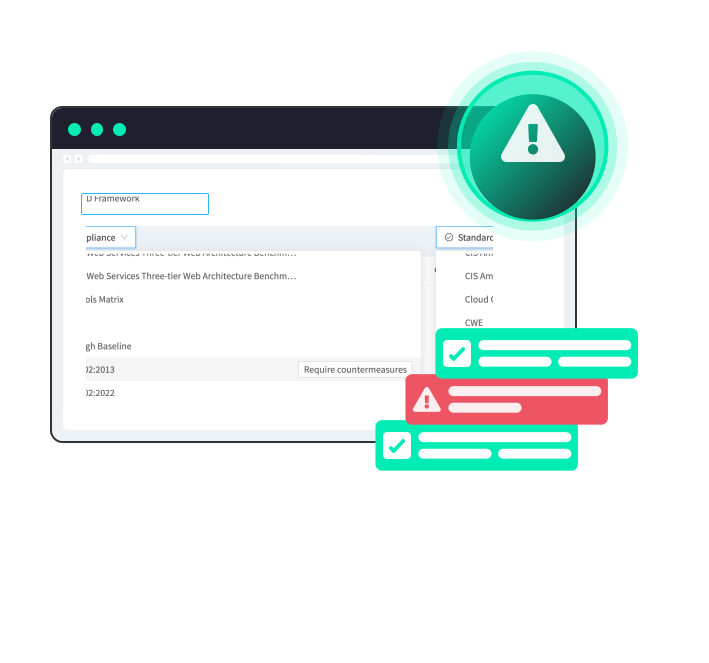
IRIUSCOMMED project core purpose is to lay the foundations for the introduction of Threat Modeling and Zero Trust methodology in the guided design of secure software architectures and infrastructures, regardless of their knowledge in cybersecurity, offering an innovative solution in cybersecurity management, especially to SMEs, actively and directly improving cybersecurity methodologies and audits through the analysis, prevention and mitigation of threats.


A digital Europe where every organisation – regardless of size or cybersecurity expertise – can design and operate secure software architectures by default, protecting their business, their customers and society from evolving cyber threats.

IRIUSCOMMED’s mission is to democratise threat modeling and Zero Trust by turning them into an accessible, guided and community-driven solution. The project will enhance and scale the IriusRisk platform, automate critical security tasks, provide rich templates and training resources, and build a vibrant community of developers, SMEs, security officers and authorities.
Together, these elements will strengthen the cybersecurity value chain, support EU strategies and enable secure digital transformation across sectors.IRIUSCOMMED’s mission is to democratise threat modeling and Zero Trust by turning them into an accessible, guided and community-driven solution. The project will enhance and scale the IriusRisk platform, automate critical security tasks, provide rich templates and training resources, and build a vibrant community of developers, SMEs, security officers and authorities. Together, these elements will strengthen the cybersecurity value chain, support EU strategies and enable secure digital transformation across sectors.